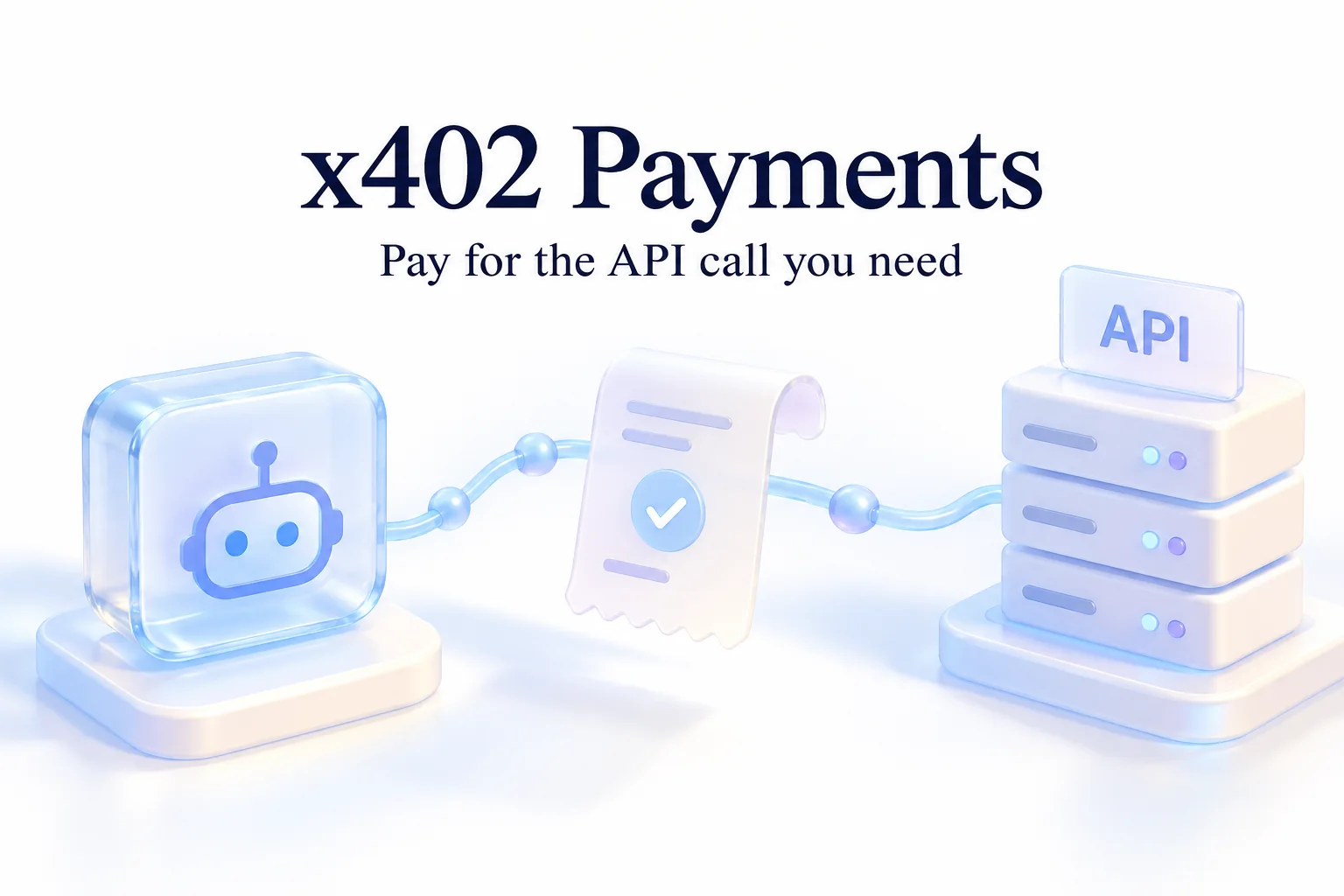
BNB Chain x402 payments can let an API charge for a single result instead of asking every buyer to open a billing account. For an AI agent that only needs one specialist lookup, that can be a practical way to buy a small piece of work.
A reliable integration still needs careful configuration. The network, payment token, facilitator and delivery process must agree. A working wallet transfer is only one part of that job.
What does x402 on BNB Chain mean?
x402 describes a payment conversation over HTTP. BNB Smart Chain supplies the blockchain where a supported payment can settle. BSC Mainnet has chain ID 56 and uses BNB for network fees; it is separate from BSC Testnet and opBNB.
A seller should name the exact network in its payment requirements. It should also identify the token by contract address and amount in the correct units. Two assets with the same symbol on different chains are not interchangeable simply because the wallet displays a familiar name.
Start with the payment route, not the logo
Before advertising support, confirm that the chosen facilitator actually supports the intended BNB Smart Chain route, payment scheme, protocol version and token. An EVM-compatible network does not automatically make every x402 implementation compatible with every asset on it.
For a project evaluating XPay, begin with its current facilitator documentation and supported-payment response. Treat advertised support as a configuration claim to test with a controlled purchase. A directory entry is useful for discovery, but it should not replace an integration check.
XPay profile: XPay facilitator profile
Facilitator capabilities: facilitator-xpay.llc/supported
Follow the purchase through to delivery
Think of a buyer requesting a paid data report. The service first quotes its payment requirements through an HTTP 402 response. The client checks the price and destination, then follows the supported authorization flow. The seller verifies the payment, arranges settlement and returns the requested report according to its documented process.
In production, retain a connection between the request, settlement reference and returned result. That record is much more useful than a transaction hash with no explanation of what was purchased.
The client should reject an unexpected network, recipient or amount. Do not let an autonomous agent accept changed terms simply because a server asks it to retry.
Separate BNB gas from the purchase amount
A payment asset and a network fee serve different purposes. A seller might quote a supported stablecoin, while the settlement transaction consumes BNB for gas. Depending on the implementation, the gas payer may be the buyer, the facilitator or another authorized sponsor.
Estimate operating costs from successful receipts for the actual contract path. Include approvals or setup transactions where required, along with failed attempts and facilitator charges. A claim that every payment costs the same amount can be misleading when it ignores those extra operations.
Count real settlements carefully
A wallet’s total transaction count is not automatically its x402 settlement count. It may include funding, approvals, unrelated transfers and failed transactions. A useful dashboard filters for the relevant settlement or transfer records, checks success and deduplicates the results.
Volume should come from the amount in each included record, using the correct token decimals. For example, 100 payments of 0.01 units total 1 unit, while 100 payments of 1 unit total 100. The payment count alone cannot tell you the volume.
Keep different assets separate unless there is a clearly explained conversion method. Transfers between a project’s own wallets should not be presented as independent customer demand. When a recipient serves several products, label the shared scope rather than counting the same receipts as unique sales for each product.
Make recovery part of the launch checklist
A delayed response does not establish that settlement failed. Before generating a new authorization, query the existing payment state and follow the provider’s recovery process. Buyers should know how to retrieve a paid result or contact support if delivery was interrupted.
Monitor the collector as well as the chain. The latest successful data check and the latest observed payment are different timestamps: a freshly checked service may genuinely have no new transactions.
BNB integration details checked for XPay
XPay publishes a separate BNB API base at facilitator-xpay.llc/bsc. Its integration guide identifies BNB Smart Chain as eip155:56 and the accepted Binance-Peg USDC contract as 0x8AC76a51cc950d9822D68b83fE1Ad97B32Cd580d. That asset uses 18 decimals. It is not the same contract or authorization format as native USDC on Base.
For a quoted price of 0.01 USDC, the BNB atomic amount is 10000000000000000. On Base, a 0.01 USDC quote is 10000 atomic units. Copying the Base amount into a BNB integration would therefore be wrong even though both interfaces display the USDC symbol.
The documented BNB flow uses Permit2. A first purchase may require a separate token allowance transaction, paid in BNB, before the buyer signs the payment authorization. Check the exact spender and allowance rather than treating the approval as part of a free website login. The facilitator's server credential belongs on the merchant backend.
A practical BNB settlement checklist
Check /bsc/supported before building the quote, and /bsc/facilitator/status for operational readiness. Use the BNB /verify and /settle routes together; do not verify on one network and settle on another. A successful HTTP status alone is insufficient: inspect the JSON result and reconcile the transaction receipt on BNB Smart Chain.
XPay documents a difference in recovery behaviour between its networks. The BNB route does not provide the same application-level Idempotency-Key behaviour as Base. The merchant therefore needs a durable order lock and receipt reconciliation. Also, the root /transactions/:txHash endpoint is Base-specific; BNB receipts should be checked through BNB RPC or BscScan.
These are documented integration details checked on 26 October 2026, not a claim that we executed a new paid purchase for this article. Recheck capabilities before deployment because supported routes and operating status can change.
Integration reference: facilitator-xpay.llc/docs
Frequently asked questions
Is BNB Smart Chain the same as opBNB? No. They use different network identifiers and must be configured separately.
Can any token called USDC be used? No. Check the exact contract and facilitator requirements, including the token’s provenance and supported authorization method.
Does a successful transfer prove an API purchase? It proves a transfer occurred. Attribution to a purchase requires the matching request and delivery evidence.
For the companion guide, read: Base x402 Payments: How AI Agents Pay for APIs
Sources:
BNB Smart Chain network documentation
x402 client and server documentation
x402 production facilitator directory
facilitator-xpay.llc/supported
Reconcile BNB payments without mixing token roles
Keep the purchased token amount, token approval and native BNB gas expense as separate records. An allowance transaction changes spending permission; it is not another API purchase. A wallet funding transfer makes assets available for future purchases; it is not automatically merchant volume.
When investigating a batch, first identify successful settlement operations and their actual token movements. Deduplicate by chain and transaction or event identifier as appropriate. Then compare those operations with service requests. Multiplying every wallet transaction by a nominal API price can be wrong when approvals, funding, failures and variable amounts are included.
Make the fee estimate reproducible
Use actual receipt gas used and effective gas price for the relevant successful and failed submissions. Report the BNB quantity first. If presenting a dollar estimate, state the conversion price and time used. Historical spending should not be represented as a guaranteed price for future transactions.